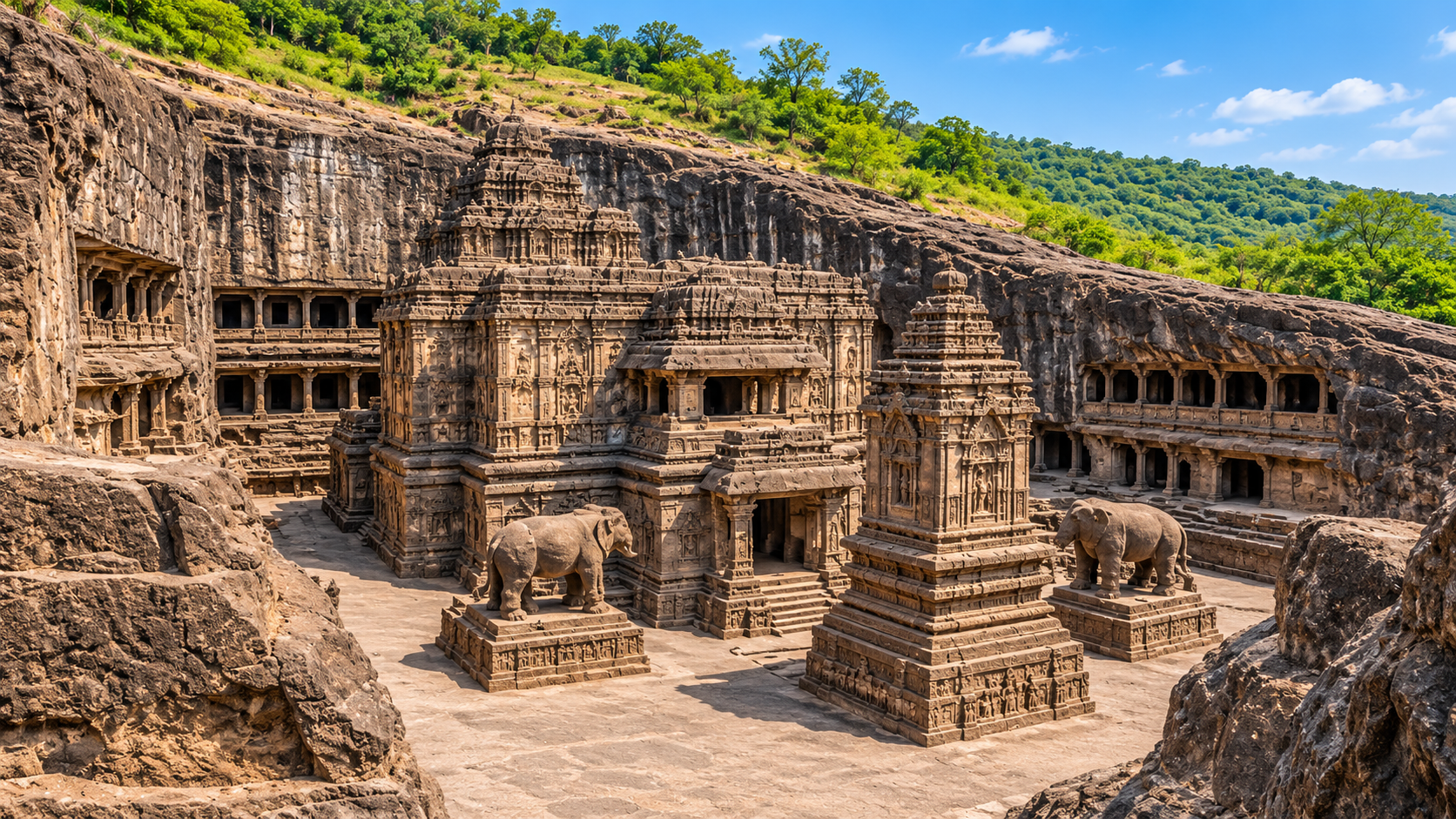
Khajuraho at a Glance
Khajuraho temples are home to some of the finest temple architecture in India. Sandstone temples rise from the ground in layered peaks, their walls covered in carvings of gods, dancers, musicians, warriors, and couples. Certain aspects of Khajuraho temple architecture clearly show how rich and varied temple art was in medieval India. Khajuraho temple is in the Chhatarpur district of Madhya Pradesh. This redBus guide covers the location of Khajuraho Temple, its timings, history, and the essentials you need for your trip.
The Chandela Dynasty and the Temples’ Building Period
The Chandelas ruled the Bundelkhand region of central India from the 9th to the 15th centuries. Khajuraho was their first capital. Most of the Khajuraho temples were built in the 10th and 11th centuries. This is where the history of Khajuraho temples date back. The Lakshmana Temple dates to the 10th-century reign of Yashovarman, and the Kandariya Mahadeva Temple was added about a century later.
The Chandela kings are believed to have built the Khajuraho temples, including around 85 temples. Only 22 survive today, spread across three groups.
UNESCO World Heritage Listing and Why the Sculptures Draw Visitors
UNESCO inscribed the Khajuraho Group of Monuments as a World Heritage Site in 1986. It praised the temples for their highly original architecture and decoration. The sculptures of Khajuraho temples attract visitors from around the world. They show religious life, courtly life and everyday scenes. These are carved with a level of detail and movement rare for the period.
The Western Group: Khajuraho’s Highlight
The Western Group is the largest and most lavishly decorated cluster, and most visitors begin here. It stands near the Shiv Sagar tank.
Important Temples
- Kandariya Mahadeva
The largest and tallest temple, it is dedicated to Shiva. It rises nearly 30.5 metres and was built around 1030 CE. Its central tower is said to represent Mount Kailash.
- Lakshmana
Built in 954 CE as a seat of Vishnu, and widely considered the most refined temple in the complex.
- Vishvanatha
A Shiva temple often described as the most spectacular shrine on the eastern side of the Western Group.
- Chitragupta
The only temple at Khajuraho dedicated to Surya, the Sun god.
- Devi Jagadambi
Originally dedicated to Vishnu, it now holds an image of Parvati.
- Matangesvara
Still an active place of worship, with one of the largest Shivalingams in northern India.
The Eastern and Southern Groups
These groups are quieter and give a different view of the site.
Important Temples
- Eastern Group
Home to the Jain temples, including Parshvanatha, Adinatha and Santinatha. These Khajuraho temples are dedicated to the first Tirthankara and are counted among the finest monuments at Khajuraho. The group also includes the Hindu Brahma and Ghantai temples.
- Southern Group
The best-known shrines in the Southern Group of Khajuraho Temples are the Duladeo and Chaturbhuj temples. They are less crowded, so you can explore the carvings at your own pace.
Khajuraho Stone Carvings
Khajuraho’s temple art is rich. The walls carry gods and goddesses, celestial nymphs called apsaras, dancers, musicians, hunting scenes, farming scenes and women dressing. About 10% of the temple surface shows erotic couples, set within larger panels rather than apart from them. Playful details appear too, such as an onlooker peeking through his fingers.
Meaning of the Carvings in Hindu and Jain Thought
In the Hindu scriptures, life has four aims: dharma (duty), artha (wealth), kama (pleasure) and moksha (liberation). Kama is one stage of life, not a sin. Placing couples on temple walls, alongside gods and ordinary people, fits this idea. Scholars offer other explanations too. These include teaching material for temple craftsmen, a reflection of society and a celebration of human life.
The Jain temples in the Eastern group are different. They have no erotic carvings or hunting scenes, and their walls hold images of the Jain Tirthankaras. Overall, there are varied temple architecture in Khajuraho.
How to Reach Khajuraho Temples
You have all three modes to reach Khajuraho temples:
- By Air
Khajuraho has its own airport, though flights are limited. Check the current schedule before you book, and keep a road option as a backup.
- By Train
Khajuraho has a railway station, and the nearest major junctions are Jhansi and Satna. You can check trains and PNR status on redRail by redBus. You may also check railway quota for booking train tickets, if applicable.
- By Road
Khajuraho is about 45 km from Chhatarpur, and buses connect it with nearby cities. You can search routes and book buses on redBus. A taxi from Jhansi or Satna is another option.
Best Time to Visit and What to Carry
The most comfortable months are October to March for Khajuraho temples. This is when days are mild and walking between temples is easy. Summers are very hot. So, if you must travel then, visit early in the morning or after 4 PM.
Temple timings can change, but the Western Group generally runs from around 8 AM to 6 PM. The Western Group ticket is ₹40 for Indian visitors and ₹600 for foreign visitors. Confirm the current fee on arrival.
What to carry:
- Comfortable walking shoes you can slip off at active shrines
- A hat, sunscreen and a water bottle
- Modest clothing for temple visits
- A camera or phone with enough storage, since the carvings are worth photographing
- Your tickets, kept handy for each group
Khajuraho Dance Festival: Tickets, Timings, and Highlights
The Khajuraho Dance Festival is held against the backdrop of the temples every February. The 2027 edition runs from 20 to 26 February, and the venue is the Western Group of Temples.
- Tickets: Entry to the Dance Festival is free. So, there are no tickets to buy. If you can’t make it in person, the performances are also streamed live on the festival’s social media handles.
- Timings: Performances take place in the evening, under the open sky. The festival opens with an inauguration ceremony at 7 PM on the first day, 20 February. Day-wise performance times and the line-up are published with the official festival programme at the official website. So, check the timings of Khajuraho temples a few days before you travel.
- Classical Dance
Khajuraho Temples Dance Festival is organised by the Department of Culture, Government of Madhya Pradesh, in collaboration with Madhya Pradesh Tourism. It brings together India’s finest classical dancers, and past editions have featured Kathak, Bharatanatyam, Odissi, Kuchipudi, Mohiniattam, Kathakali and Manipuri dances.
- Art and Culture
Exhibitions, an art market, discussions with artists and a Bundeli food festival run alongside the performances
- Experiences Around the Venue
Village tours, e-bike tours of the temples and glamping are on offer.
If you plan to visit during the Khajuraho Temples dance festival, book your stay and transport early, as Khajuraho fills up quickly that week.
2 Day itinerary at Khajuraho Temples
Here’s a quick 2-day itinerary for your next Khajuraho temple visit:
Day 1: The Western Group
- Morning (8 AM)
Start at Kandariya Mahadeva, then visit Lakshmana, Vishvanatha and Chitragupta before the crowds build up.
- Midday
Visit Devi Jagadambi and Matangesvara, then break for lunch and rest.
- Afternoon
Walk around the Shiv Sagar tank and spend time looking at the carvings without rush.
- Evening
Attend the light and sound show at the Western Group, if it runs on your dates.
Day 2: The Eastern and Southern Groups
- Morning
Visit the Jain temples in the Eastern group, including Parshvanatha, Adinatha and Santinatha, and then the Brahma and Ghantai temples.
- Midday
Go on to the Southern group to see the Duladeo and Chaturbhuj temples.
- Afternoon
Browse local craft stalls or visit a museum, then head to the railway station, airport or bus stand.