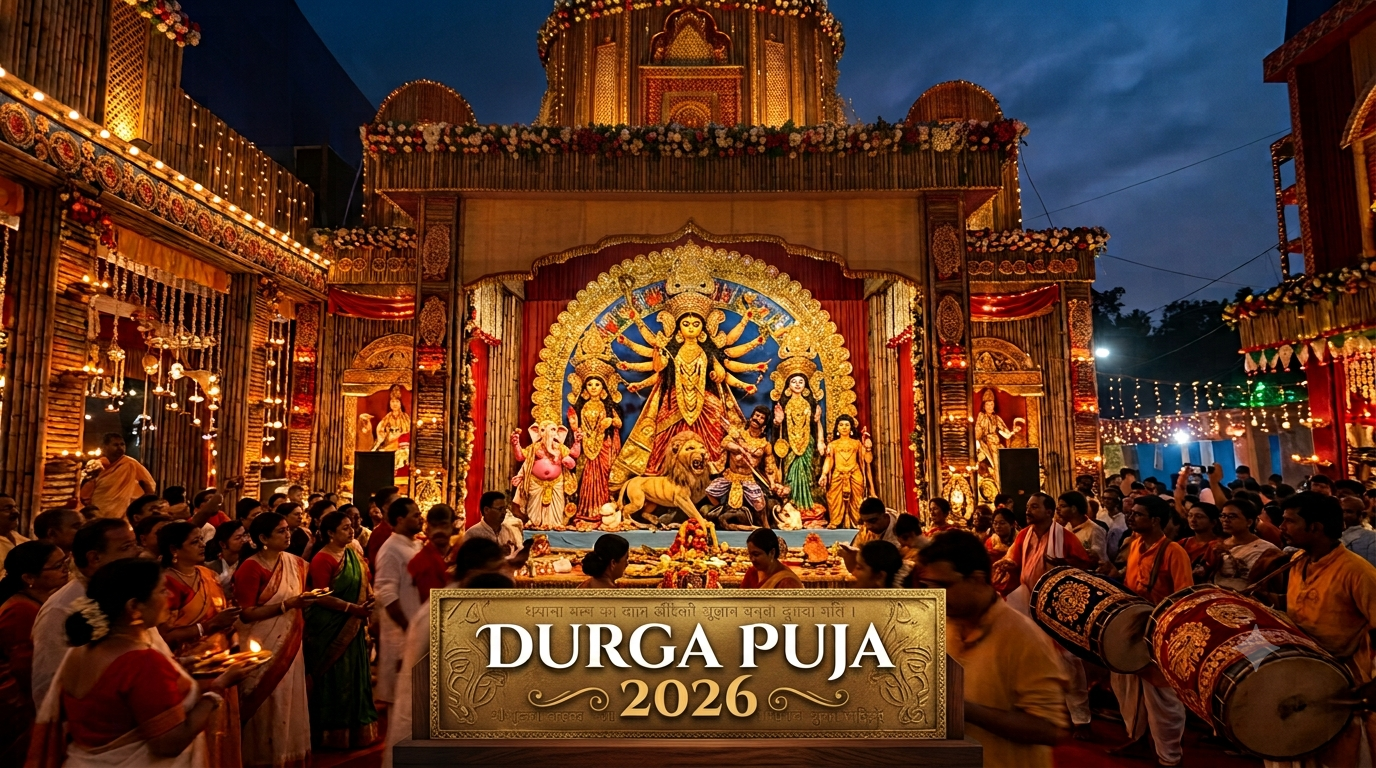
Durga Puja, or Durga Pujo as it is called in Bengal, is the grandest festival of West Bengal and is widely celebrated across eastern India. For five days, Kolkata and other cities are filled with grand pandals, puja, bhog, cultural programmes, and people out celebrating with family and friends.
If you are planning to travel and experience the Durga Puja celebrations in 2026, find out when is Durga Puja this year, along with its main rituals, pandals, food, and other traditions.
Durga Puja 2026 Dates & Timings
Durga Puja 2026 is celebrated as a 5-day festival in West Bengal, starting from Shashthi on 16th October and ending with Vijaya Dashami on 21st October. Before the festival starts, Mahalaya will fall on 10th October, marking the beginning of Devi Paksha and the arrival of Goddess Durga.
Here is a complete breakdown of the Durga Pujo dates and tithi timings for 2026:
| Day | Date | Day | Tithi Begins | Tithi Ends |
| Mahalaya (Start of Devi Paksha) | 10th October 2026 | Saturday | 9 October, 9:37 PM | 10 October, 9:20 PM |
| Maha Shashthi | 16th October 2026 | Friday | 16 October, 3:25 AM | 17 October, 5:55 AM |
| Maha Saptami | 18th October 2026 | Sunday | 17 October, 5:55 AM | 18 October, 8:29 AM |
| Maha Ashtami | 19th October 2026 | Monday | 18 October, 8:29 AM | 19 October, 10:52 AM |
| Maha Navami | 20th October 2026 | Tuesday | 19 October, 10:52 AM | 20 October, 12:51 PM |
| Bijaya Dashami | 21st October 2026 | Wednesday | 20 October, 12:51 PM | 21 October, 2:12 PM |
For the exact puja timings, check the Panchang followed in your area. Timings for rituals such as Sandhi Puja, Kumari Puja, Anjali, and Bodhon are based on the tithi and may vary slightly between different Panjikas and locations.
The Legend of Durga: History & Mythology
The story behind Durga Puja comes from Hindu mythology, while Bengali tradition gives the festival another meaning. Here’s why Durga Puja is celebrated:
- The Legend of Mahishasuramardini: Mahishasura was a powerful demon who could not be killed by any god or man. To defeat him, Brahma, Shiva, and Vishnu used their powers to create Goddess Durga. After fighting Mahishasura for 9 days, she finally killed him on Vijaya Dashami, marking the victory of good.
- Homecoming of Uma: For Bengali Hindus, Durga Pujo is also about welcoming Durga (Uma) home. She is seen as a daughter coming back to her parents’ house with her kids – Saraswati, Lakshmi, Kartikeya, and Ganesha. She stays for five days before returning to Shiva, making Pujo a time of homecoming and family reunions.
Nine Avatars of Durga (Navadurga)
It is believed that Goddess Durga took a different form during each stage of her battle with Mahishasura. Devotees worship one of these 9 avatars of Goddess Durga on each day of the Navratri celebrations:
- Shailaputri: The first form of Durga as the daughter of the mountains.
- Brahmacharini: The form of Durga known for devotion and determination.
- Chandraghanta: The warrior form of Durga, known for courage and strength.
- Kushmanda: The form associated with energy, light, and creation.
- Skandamata: The mother of Lord Kartikeya, also known as Skanda.
- Katyayani: A warrior form of Durga who fights evil.
- Kalaratri: The fierce form of Durga who protects devotees from evil.
- Mahagauri: The form associated with peace and purity.
- Siddhidatri: The ninth form of Durga, associated with wisdom and blessings.
The 5 Days of Durga Puja
The main Durga Puja celebrations in Bengal start with welcoming Durga home, worshipping her, and then finally bidding her farewell. If you’re visiting Kolkata during this time, here’s what you should know about Durga Puja celebrations during these five days:
- Shashthi: Durga Pujo celebrations officially start on Shashthi with Bodhon. The priest chants mantras to awaken the Goddess during Bodhon.
- Saptami: After the holy Nabapatrika Snan ritual in the morning, the priest performs Pran Pratishtha to welcome the divine energy of Maa Durga into the idol. People also start visiting pandals across the city with family and friends.
- Ashtami: Maha Ashtami remains the most significant day of the Durga Puja festival. People gather at pandals to offer pushpanjali to Durga. Later, Sandhi Puja happens when Ashtami ends and Navami begins.
- Navami: Navami is celebrated with a Maha homa, aarti, and Kumari Puja. As it is the last full day before Durga’s farewell, people make the most of the celebrations by visiting pandals and sharing bhog.
- Vijaya Dashami: The five-day Durga Puja celebration ends with a farewell to Goddess Durga. After rituals such as Sindoor Khela, the idols go out in procession for visarjan. People then meet family and friends and greet them saying ‘Shubho Bijoya’.
Understanding the Durga Puja
Pujo Pandals
Pandals are a major part of Durga Pujo in West Bengal. Local clubs build these temporary structures to house the Durga idols. Many are works of art, with themes inspired by old temples, famous landmarks, Bengal’s history and culture, or social issues. Pujo pandals also bring Bengal’s art and craftsmanship into the spotlight.
For many people, Durga Puja celebrations are synonymous with pandal hopping. In Kolkata, families and friends visit one pandal after another to see the idols, artwork, and lights. Food stalls and small fairs are also set up near many popular pandals, creating a festive atmosphere.
The Idols
Most Durga idols in Kolkata come from the famous Kumartuli (potters’ neighbourhood), where families of artisans have been making idols for generations. Artisans begin by making a straw frame, cover it with layers of clay, and finally paint and decorate the idol.
The traditional Durga idol shows the Goddess defeating Mahishasura, with Saraswati, Lakshmi, Kartikeya, and Ganesha around her. Theme-based pandals may also have specially designed idols, giving artists more room to experiment with the idol’s look and style.
Rituals & Ceremonies
All 5 days of Durga Puja have several important rituals and ceremonies. Some of the key ones include:
- Kola Bou Snan: On Saptami morning, 9 different plants representing 9 forms of Durga are tied together and given a ceremonial bath. The Nabapatrika (Kola Bou) is then draped in a saree and brought to the pandal for worship.
- Pushpanjali: Devotees fast all morning and offer flowers to Goddess Durga while reciting mantras. Pushpanjali is offered on different days, but the one on Maha Ashtami remains especially important.
- Sandhi Puja: This is one of the most sacred rituals of Durga Puja. It is held exactly when Ashtami ends and Navami begins. During these 48 minutes, 108 lamps are lit, and 108 lotus flowers are offered to Goddess Durga.
- Kumari Puja: In this sacred ritual, a small girl child is brought to the pandal for worship. She is believed to be the living form of the Goddess. This puja is usually performed on Maha Ashtami.
- Sindoor Khela: Married women first offer sindoor to Goddess Durga and then put it on each other on Dashami. The ritual takes place before the Durga idol leaves for visarjan.
Regional Durga Puja Celebrations
Bengal – Kolkata
Durga Puja is the most important festival of West Bengal, celebrated most grandly in Kolkata. In 2021, UNESCO added Durga Puja in Kolkata to its Intangible Cultural Heritage list, recognising a festival that brings people from different communities together.
In Kolkata, preparations begin weeks in advance, usually after Vishwakarma Puja in September. The five days of Durga Pujo are spent visiting pandals, having bhog and meeting family and friends. Alongside the large community pujas (Barowari Pujo), many old Kolkata families still hold traditional pujas at home (Bonedi Pujos).
Dhaka
In Dhaka, Durga Puja is an important festival for the Hindu community. Puja mandaps are built throughout the city, where people come for worship, anjali, and cultural programmes. On Dashami, the celebrations end with processions and the Durga idol immersions.
Assam
Many Assamese traditions are mixed into Durga Pujo celebrations in Assam. In Guwahati, you will find grand pandals inspired by famous monuments as well as Assam’s bamboo craft. Folk dances such as Bagurumba, Karbi, and Dimasa are also performed during the celebrations. On Dashami, visarjan takes place in the sacred Brahmaputra River.
Odisha
Odisha celebrates Durga Puja with many unique traditions. At some Shakti Peethas, the worship lasts for 16 days, beginning from Mulashtami. In Cuttack, Durga Pujo celebrations are famous for chandi medha, which are beautiful backdrops for idols with intricate silver tarakasi work.
Other Parts of India
Durga Puja is also celebrated in places away from East India, including Mumbai, Delhi, Bengaluru, and other Indian cities. In Delhi, Durga Puja celebrations at CR Park and Kashmere Gate Puja are very famous.
Bengal Club at Shivaji Park and Lokhandwala Durgotsav hold grand Durga Puja celebrations in Mumbai, while Kolaj Durga Puja is among the famous community pujas in Bengaluru. These pujas bring together Bengali families for traditional rituals, bhog, and cultural programmes.
Food & Culinary Traditions
Food is a big part of Durga Pujo celebrations in Kolkata and other parts of India. Unlike Navratri, Durga Puja does not require everyone to eat vegetarian food.
- Pujo Bhog: The bhog offered to Goddess Durga is vegetarian and usually includes Khichuri, Labra, Begun Bhaja, and Payesh.
- Ashtami and Navami Traditions: Many Bengali families eat vegetarian food on Ashtami and cook mutton on Navami. Luchi, Cholar Dal, Kosha Mangsho, and Biryani are also popular during the five days of Pujo.
- Street Food During Pandal Hopping: People pick up egg rolls, fish fry, and kebabs from stalls near the pandals and eat as they walk.
- Dashami Food Traditions: People first offer sweets to the Goddess during Sindoor Khela. Later, families share Rosogolla while wishing each other Shubho Bijoya.
Conclusion
Every year, thousands of people wait eagerly for Durga Puja, especially in West Bengal. For 5 days, people visit pandals, offer prayers, meet family and friends, and enjoy their favourite Pujo food. In Kolkata, celebrations continue from morning through the night.
If you want to experience Kolkata’s grand Durga Puja celebrations this year, plan your trip in advance so you have enough time for the theme-based pandals, bhog, and street food. You can book your journey with redBus and save more with festive discounts and offers.
FAQs
- When is Durga Puja in 2026?
Officially, Durga Puja starts on Shashthi, 16th October 2026, and ends on Dashami, 21st October. Mahalaya is celebrated earlier on 10th October 2026.
2. How is Durga Puja different from Navratri?
Both festivals worship Goddess Durga, but the traditions are different. Navratri lasts nine nights and is widely celebrated with fasting, Dandiya, and Garba. Durga Puja has 5 main days and is especially popular in Bengal and other Eastern states, where it’s celebrated with grand pandals, bhog, and traditions such as Dhunuchi dance and Sindoor Khela.
3. Why is Durga Puja celebrated?
Durga Puja is celebrated to honour Goddess Durga’s killing of Mahishasura, symbolising the defeat of evil and the return of peace. In Bengal, Durga Puja is also a celebration of the daughter, Uma, returning to her parents’ home.
4. Why does the Durga Puja date change every year?
The dates of the Durga Puja festival depend on the Hindu lunar calendar, so they change on the English calendar every year. Durga Puja usually falls in September or October, depending on the lunar dates or tithis.
5. What is the significance of Mahalaya?
Mahalaya is the beginning of Devi Paksha as well as the arrival of Goddess Durga. On Mahalaya, many Bengalis perform Tarpan, offering prayers to their ancestors. In most homes, the morning also begins by listening to the traditional Mahishasuramardini radio broadcast.
6. Is Biswakarma Puja a part of Durga Puja?
No. Biswakarma Puja is a separate festival dedicated to Lord Vishwakarma, the divine architect. In Bengal, it is celebrated a few weeks before Durga Puja and is often seen as a sign that Pujo is getting closer.


